
Socio-Economic Policies & Human Development
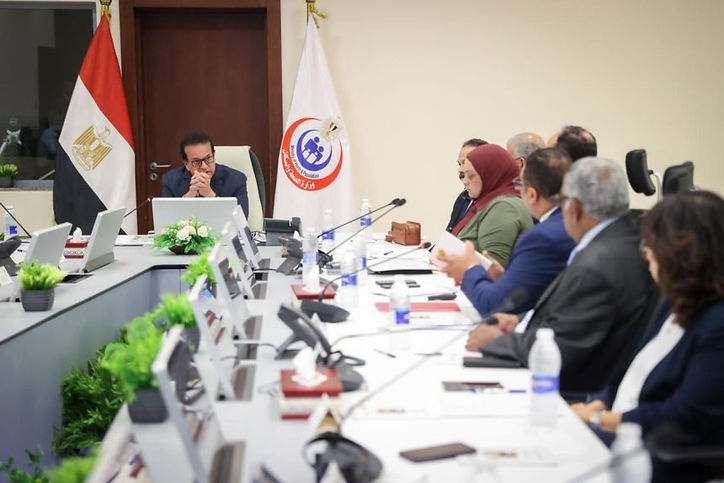
From topics of economic growth to topics of mental health and well-being, this scope of work is an intersectional comprehensive scope that focuses on various global and national issues. It allows us to study the main strategic priorities in policy-making through analysis, research and implementation. It involves the analysis, evaluation, and improvement of policies aimed at fostering economic growth, reducing inequalities, and enhancing the overall quality of life.

ِArticle
Egypt’s Strategic Priorities: A Youth Vision for the Future
By Basmala Tamer Abbas - Researcher, The Strategic Priorities Hub
This paper presents a comprehensive, youth-driven vision for Egypt’s future by identifying the country’s strategic priorities through direct engagement with young Egyptians. It positions youth not merely as beneficiaries of policy, but as active partners in shaping a sustainable development agenda built on six core pillars, ranging from human capital and economic prosperity to governance and social protection.
The paper goes beyond capturing perspectives to analyze structural gaps and propose actionable reforms that align with evolving societal needs and labor market realities. By highlighting the interconnected nature of economic stability, social cohesion, and quality of life, it underscores the urgency of adopting a holistic, data-driven policy approach. Ultimately, the paper offers a forward-looking framework that channels youth aspirations into a credible roadmap for inclusive growth, institutional reform, and long-term national resilience.
Photo: amideast
Policy Paper
Navigating the Subsidy Reform in Egypt: A Framework for a Gradual and Secure Transition from In-Kind to Conditional Cash
By Basmala Tamer Abbas - Researcher, The Strategic Priorities Hub
This policy paper examines Egypt’s critical transition from an in-kind food subsidy system to a targeted cash transfer model, positioning it as a pivotal reform for both fiscal sustainability and social equity. It seeks to establish a comprehensive framework for a gradual and secure transition that safeguards vulnerable populations while addressing systemic inefficiencies and resource leakage.
The paper goes beyond diagnosis to analyze multiple policy pathways, including indexation mechanisms and hybrid models, assessing their economic trade-offs and institutional feasibility. By drawing on international experiences and grounding its analysis in Egypt’s specific context, it highlights the complexity of balancing inflation risks, market dynamics, and political considerations. Ultimately, the paper presents a strategic, data-driven roadmap aimed at transforming the subsidy system into a more efficient, resilient, and impactful pillar of inclusive development.
Photo: Zawia3

ِIssue Paper
Foreign Ownership of Real Estate in Egypt : Hard-Currency Gains, Housing Pressure, and Sovereignty Concerns
By Farouk Saleh - Researcher, The Strategic Priorities Hub
This Issue paper examines Egypt’s growing push to attract foreign and non-resident demand for real estate as a source of hard currency. With non-resident real-estate inflows reaching USD 1.9 billion in 2025, the report assesses the potential economic benefits of Egypt’s emerging “real estate export” strategy alongside its social and political implications. It focuses particularly on housing affordability, the geographic concentration of external demand, transparency in property ownership, and concerns surrounding large strategic land-development agreements.
The paper argues that foreign ownership is not inherently problematic and that outright restrictions are unnecessary. Instead, Egypt should strengthen governance through greater ownership transparency, mandatory registration, area-based monitoring, affordability safeguards, and a clear regulatory distinction between ordinary residential purchases and large strategic land-development projects.
Photo: LaCosta Real Estate